Laser eye surgery is now a leading surgical method for correcting vision problems. Thanks to the latest generation of laser technologies and the expertise of surgeons, it effectively treats a wide range of visual defects: myopia, hyperopia, astigmatism, and presbyopia.
More and more people are considering this surgical procedure to permanently free themselves from glasses or contact lenses. But who can benefit from refractive surgery? What are the eligibility criteria? What laser treatments are available, and how is the procedure performed? This article guides you step by step to better understand the entire process, from the pre-operative consultation to recovery, including the different surgical techniques available at Oculus clinics in Switzerland.
How is laser eye surgery performed?
The procedure follows a rigorous protocol, designed to optimize safety and personalization of the laser treatment.
Pre-operative consultation: assessment and eligibility
It all begins with a thorough pre-operative consultation. It is at this stage that a specialist determines if you are a good candidate for refractive surgery. Eligibility depends on several factors: age, stability of your prescription, general eye health, corneal thickness, type of visual defect, etc.
The evaluation includes detailed examinations of your eyes, including corneal topography, refraction measurements, and intraocular pressure measurements. This allows us to determine the most suitable treatment for your individual needs.
Local anesthesia and procedure
The procedure is quick and performed under local anesthesia, usually in the form of eye drops. The patient remains awake and feels no pain. The surgery lasts on average 10 to 15 minutes per eye, depending on the technique chosen.
- Femtolasik: creation of a corneal flap with a femtosecond laser, then reshaping of the cornea with an excimer laser.
- TransPRK (PRK technique without cutting): ideal for thin corneas, the laser is applied directly to the surface of the cornea.
- ICL implants: inserted inside the eye, these implants are indicated for high myopia or corneas unsuitable for laser treatment.
Who can benefit from refractive surgery?
Laser refractive surgery is suitable for many patients suffering from one or more visual defects, but it is not universal.
Candidate selection criteria
You are a good candidate if:
- You are over 18 years old (often recommended from 21 years old for better stability).
- Your visual impairment (myopia, hyperopia, astigmatism or presbyopia) has been stable for at least one year.
- Your eyes are healthy, without active eye diseases (keratoconus, uncontrolled glaucoma…).
- Your cornea is thick enough (otherwise, alternative techniques such as ICL implants may be offered).
Eligibility for laser correction is always confirmed following a personalized assessment during the pre-operative consultation.
To learn more about the different options and prices related to eye surgery, you can consult our article Laser eye surgery: price and reimbursement in Switzerland 2025.
Understanding visual defects corrected by laser
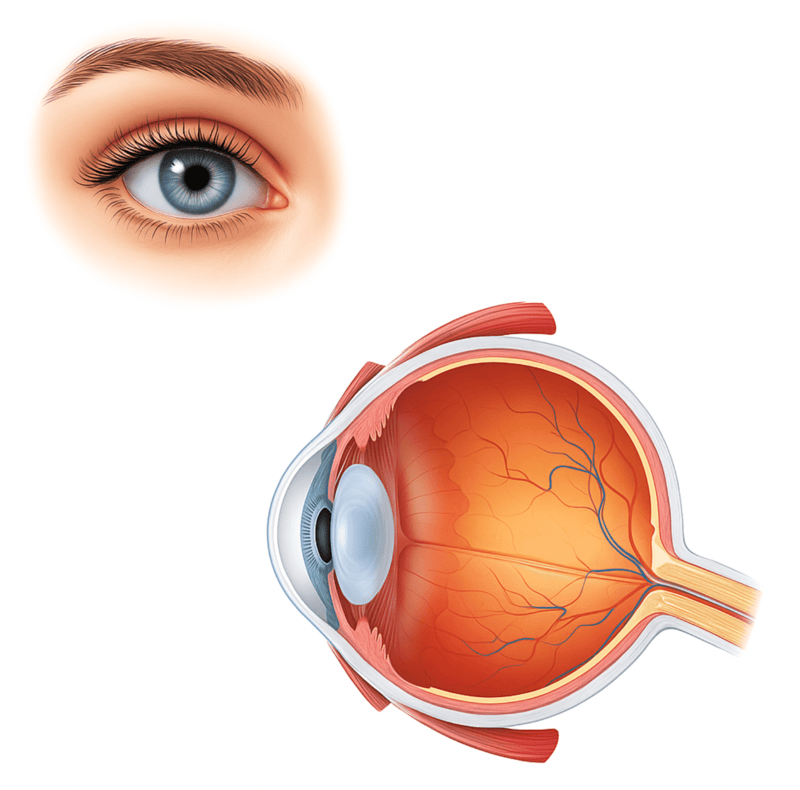
Laser treatment modifies the shape of the cornea, allowing light to focus correctly on the retina.
Myopia, hyperopia, astigmatism and presbyopia
- Myopia: blurred distance vision. The cornea is too curved or the eye is too long.
- Hyperopia: blurred near vision. The cornea is too flat.
- Astigmatism: deformation of the cornea causing distorted vision.
- Presbyopia: loss of the ability to see clearly up close with age.
Each visual defect is treated with a specific method, adapted according to the patient’s profile.
Cutting-edge technologies and optimal security
Oculus clinics use high-end equipment such as:
- The Z8 Femtosecond laser: extreme precision for corneal cutting.
- The Teneo 2 excimer laser: personalized corneal reshaping.
Real-time eye tracking systems ensure the safety of the action, even in the event of involuntary movements.
Results, side effects and post-operative follow-up
High satisfaction and rapid improvement
With a satisfaction rate of over 95%, refractive surgery offers a marked improvement in vision from the first few days, often from the next day.
Possible side effects
They sometimes include temporary dry eyes, increased sensitivity to light, or halos around lights at night. These effects are usually transient and easily managed.
Role of the surgeon
An experienced surgeon takes the time to answer all questions and ensures rigorous follow-up. Their expertise is essential to the success of the procedure.
Conclusion: Why choose Oculus clinics?
By choosing Oculus clinics, you benefit from:
- Personalized support from the pre-operative consultation onwards.
- A full assessment of your eligibility.
- Laser treatment tailored to your visual defects.
- Careful post-operative monitoring by a dedicated surgeon.
Schedule an appointment today to assess if you are a good candidate for laser eye surgery, and transform your daily visual life with safe and effective surgical correction.