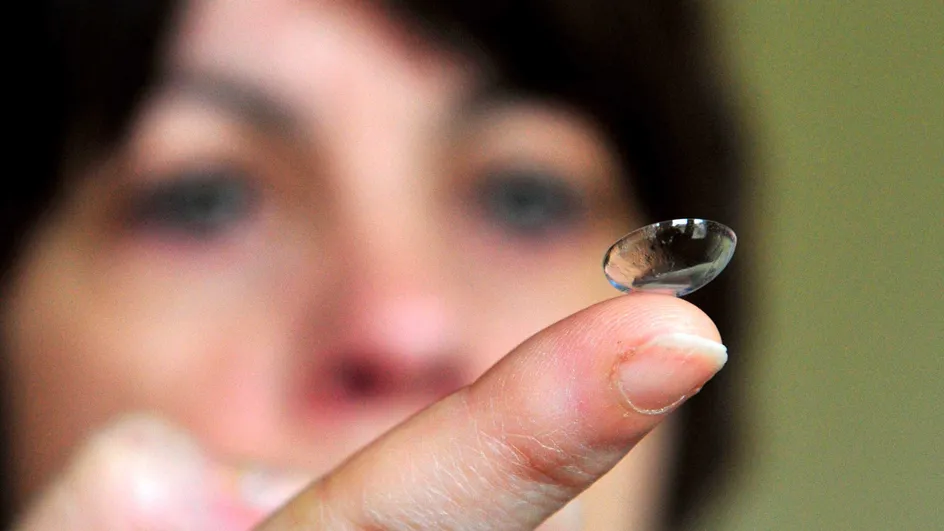
A contact lens ready to be applied.
Contact lens wearers often tend to forget the strict hygiene guidelines that should always be followed.
You should never wear contact lenses in the shower or while swimming, whether at the beach, in a swimming pool, a lake, or even at home. Likewise, you should never handle your lenses with dirty or unwashed hands.
Because contact lenses rest directly on the cornea, they create constant friction that can produce tiny openings on the eye’s surface. These small openings can become entry points for bacteria.
If your hands are contaminated with bacteria such as Staphylococcus, these microorganisms can be transferred to your eye. While they are often harmless on the skin, they can cause serious eye infections.
Symptoms usually begin with pain, redness, and increased sensitivity to light. If these signs appear, remove your contact lens immediately and consult an ophthalmologist without delay. Be sure to mention any recent misuse of your contact lenses, as delayed treatment may lead to serious long-term complications.
Acanthamoeba: a dangerous parasite
In freshwater environments and even in some treated water systems, another threat exists: the Acanthamoeba parasite.
This rare but particularly dangerous microorganism can be found in lakes, rivers, swimming pools, and even drinking water systems. One of its remarkable characteristics is its ability to survive in a protective cyst, making it highly resistant to chemical treatments.
Unfortunately, the eye is one of the environments where this parasite can become active again, especially when contact lenses are used improperly.
As Professor Eric Gabison, an ophthalmic surgeon at the Rothschild Foundation in Paris, explains, patients presenting with severe eye sensitivity despite only mild redness should always be taken seriously. In some cases, an Acanthamoeba infection may have settled along the corneal nerves.
Contact lenses and dry eyes
Contact lenses can also contribute to chronic dry eye symptoms. For many patients, this discomfort eventually leads them to stop wearing contact lenses and consider permanent laser vision correction as a long-term solution.
Laser vision correction eliminates many of the inconveniences associated with contact lens wear, including daily maintenance, hygiene constraints, dry eyes, and the risk of eye infections.